
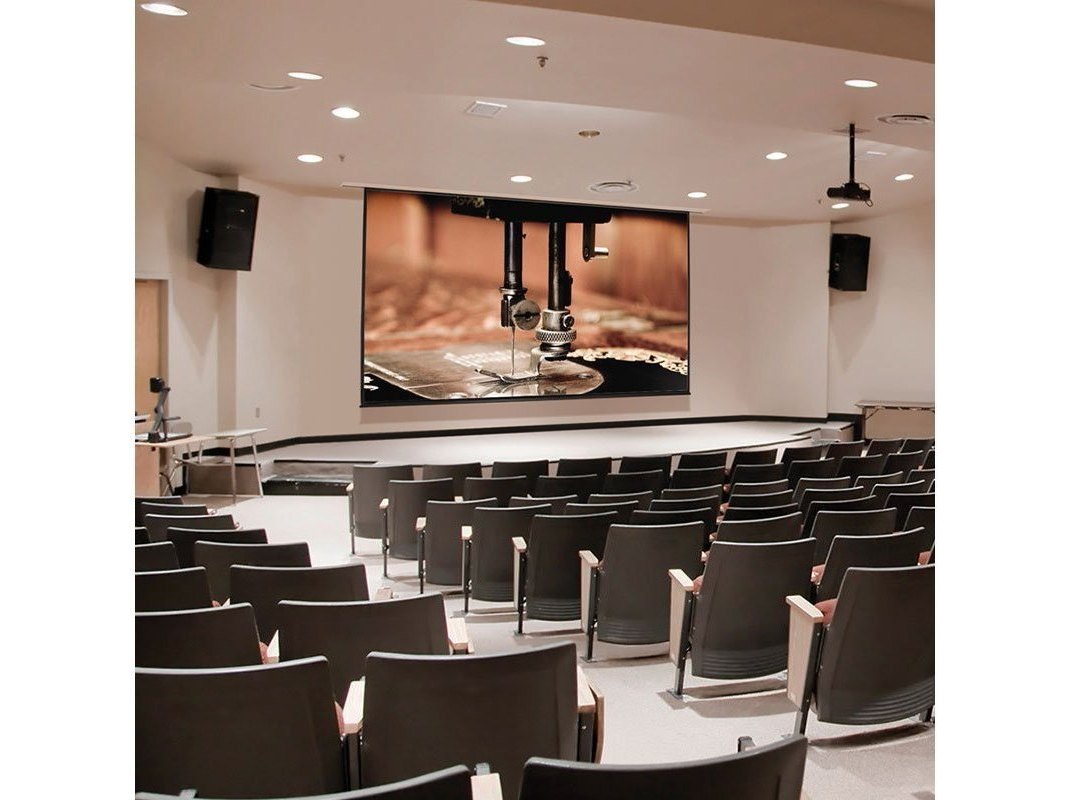
When a room needs a projector screen that disappears into the ceiling until showtime, the Draper Access XL E is the screen we point people to first. It is a large ceiling-recessed electric projection screen built for media rooms, boardrooms, and dedicated home theaters that want a clean ceiling and a big, flat picture. Here is what the Draper Access XL E does well, what to check before you order, and how we install it.
What the Draper Access XL E is
The Draper Access XL E is a ceiling-recessed electric screen, which means the case sits inside the ceiling and the screen drops down on command. When it is retracted, the room looks like a normal room, not a home theater. That is the whole appeal for clients who want a projector setup without a permanently visible screen on the wall.
The surface hangs free and stays flat, which matters on a screen this large. A detachable bottom access panel lets a technician reach the mechanism later without tearing the ceiling open, and quick-connect, plenum-rated wiring keeps the electrical side simple and code compliant. Adjustable hoisting brackets make it easier to level the case in the ceiling.
One thing we repeat on every consult is that a recessed screen is a two-stage decision. First you pick the screen, then you plan the ceiling around it. The case has to fit the cavity, the electrical has to land where the mechanism is, and the drop height has to match the seating. Get that right and the screen disappears completely. Get it wrong and you are patching drywall later.
Sizes and specs that matter
The Draper Access XL E supports a maximum image width up to 20 feet, so it scales from a modest media room to a small auditorium. The case measures 10-1/8 inches high by 9-7/16 inches deep, which tells you how much ceiling cavity the screen needs. Control is a 110V three-position switch out of the box, with low-voltage and 220V options available for more advanced systems. The standard finish is white, and black is available for darker ceilings. The screen is UL Listed and Draper backs it with a 5-year warranty.
Those numbers matter more than people expect. A case that is just under ten inches deep will not tuck into a shallow joist bay without planning, and the low-voltage control option is the one most automation systems want. If you are integrating the screen with a universal remote or a lighting scene, tell us before the drywall goes up, not after.
Where the Draper Access XL E fits best
The Draper Access XL E earns its keep in rooms where the projector is a centerpiece but the screen should not be. Dedicated home theaters use it for a clean look with light control, and boardrooms use it for a screen that is there for the presentation and gone for the meeting. Because the surface stays flat and the image width can reach 20 feet, it also works for multipurpose rooms that pull double duty.
A screen this wide is not a living-room accessory. It shines when the room is large enough to sit ten to twenty feet from the image, or when you need a presentation surface that feels intentional rather than bolted on. Think of it as the difference between a media room that feels finished and one that feels like a projector and a wall.
Compare it to a fixed-frame screen if you are deciding. A fixed frame is always visible, while a ceiling-recessed screen like the Draper Access XL E gives you the big picture only when you want it. If you are still choosing a projector to pair with it, our guide on the best 4K home theater projector is a good place to start.
What to check before you order
Before you order the Draper Access XL E, measure the ceiling cavity. The case needs the depth and width listed above, plus room for the hoisting brackets. Confirm the control voltage your system will use, and decide between the standard white case and black. Plan the wiring route while the ceiling is open, because plenum-rated quick-connect wiring is part of what keeps the install clean.
Most importantly, size the screen to the room and the seating distance. A 20-foot-wide screen is overkill for most living rooms. We would rather tell you the right size up front than sell you a screen you have to squint through from eight feet away. The same rule applies to placement: the screen has to drop to the height your seating actually works with, not just the height that fits.
Is a recessed screen worth the extra work
Recessed screens cost more than a fixed frame and they need ceiling access, so it is fair to ask whether the tradeoff is worth it. The honest answer depends on how the room is used. If the space is a dedicated theater that stays dark and shows a movie most nights, a fixed frame is hard to beat on price. If the same room hosts dinner parties, game days, and the occasional video call, the clean ceiling is the point. You are paying to keep the room flexible, not just to hide a screen.
In that second case, a ceiling-recessed electric screen is one of the few upgrades that changes how the room feels when everything is turned off. That is why we end up specifying it so often for open-plan living areas and home offices that double as presentation rooms.
Getting your Draper Access XL E installed right
A ceiling-recessed electric screen is only as good as its install. The case has to sit level in the ceiling, the wiring has to be run correctly, and the drop height has to land exactly where you planned. After 15,000+ projects, our projector screen installation team has hung screens across Houston, Sugar Land, Katy, and The Woodlands. We handle the framing, the electrical, the leveling, and the final setup so the Draper Access XL E disappears when it should and performs when it matters.
Pair it with a Screen Innovations screen if you want to compare brands, or talk to us about matching the screen to your projector and room. Shop the full Draper Access XL E and get a free in-home estimate.